
Road Projects Are Stalling Across India. The Real Reason Isn't Budget — It's Materials
Drive past almost any highway stretch under construction in India right now and you’ll notice the same thing: idle machinery, half-laid stretches, and workers standing around with nothing to do. The usual assumption is that funding has dried up. It hasn’t. The Ministry of Road Transport and Highways has kept capital outlay high year after year, and government pipelines for new road awards remain healthy. So why are so many projects still crawling instead of racing to completion?
The honest answer is materials, not money.
The Numbers Tell the Real Story
Construction speed on India’s national highways has visibly slowed. Daily paving rates that once touched close to 30 km a day have dropped meaningfully over the last year, even though targets keep climbing. Contractors aren’t short on funds allocated to them — they’re short on the raw inputs needed to actually build.
Bitumen, the binding agent that holds asphalt roads together, has seen sharp price swings tied to global crude and petrochemical supply chains. When bitumen costs spike or availability tightens, laying work simply stops, because there’s no substitute that performs the same job at the same cost. Add to that rising steel and fuel prices, and overall input costs for road contractors have climbed by a wide margin in a short span.
Bitumen isn’t the only bottleneck. Sand, aggregate, and crushed stone — the unglamorous bulk materials that make up the base and sub-base of every road — are just as critical, and just as fragile a supply chain. Multiple highway stretches across states have stalled not because of engineering disputes or land acquisition delays, but because local mining or crushing units were shut down, leaving contractors with no legal source of aggregate nearby. When the nearest quarry is 200 km away instead of 20, both cost and timeline change overnight.
Why Material Delays Hurt More Than Cash Flow Delays
A funding delay is usually a scheduling problem — money arrives late, but it arrives. A materials shortage is a physics problem. You cannot pour a road with material you don’t have, no matter how much cash is sitting in the contractor’s account. This is why material-driven stalls tend to be longer and harder to recover from than administrative or financial ones.
There’s also a compounding effect. Research on infrastructure delays in India has found that material shortages are closely linked to knock-on problems: weather disruption leads to material shortages, which then leads to site-access issues and rework, which then triggers late payments and subcontractor delays. One weak link in the material supply chain doesn’t just delay one activity — it drags the whole project timeline sideways.
The Quality Trade-Off Nobody Talks About
There’s a quieter risk hiding inside every material shortage: substitution. When contractors can’t get the specified material on time, some reach for whatever is locally available instead — off-spec aggregate, diluted binders, or inconsistent mix ratios — just to keep the project moving and avoid penalty clauses. This is how roads end up cracking, rutting, or developing potholes within a year or two of opening, long before their intended design life.
This is exactly where the construction materials industry needs to raise its own bar. A road, a building, or any structure is only as reliable as the weakest material in it. Consistent quality, tested performance, and dependable supply matter just as much as the engineering drawing.
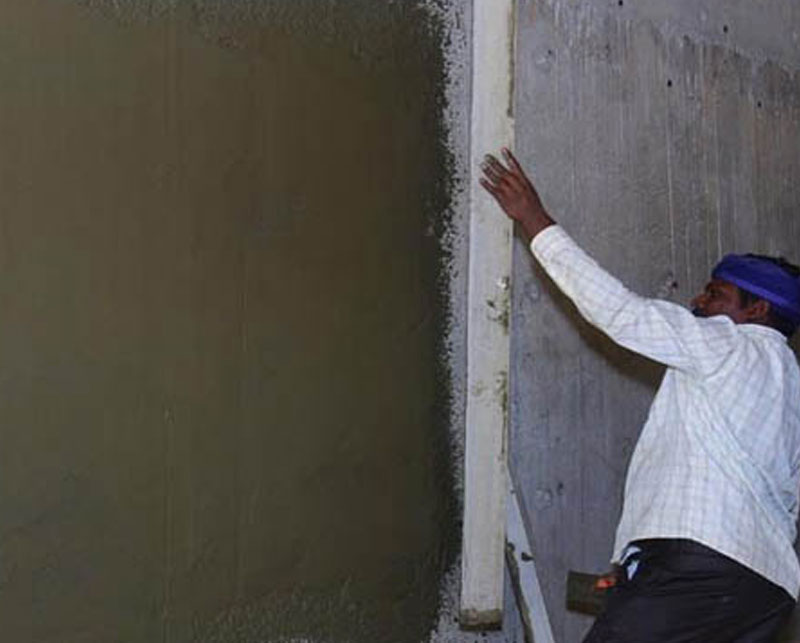
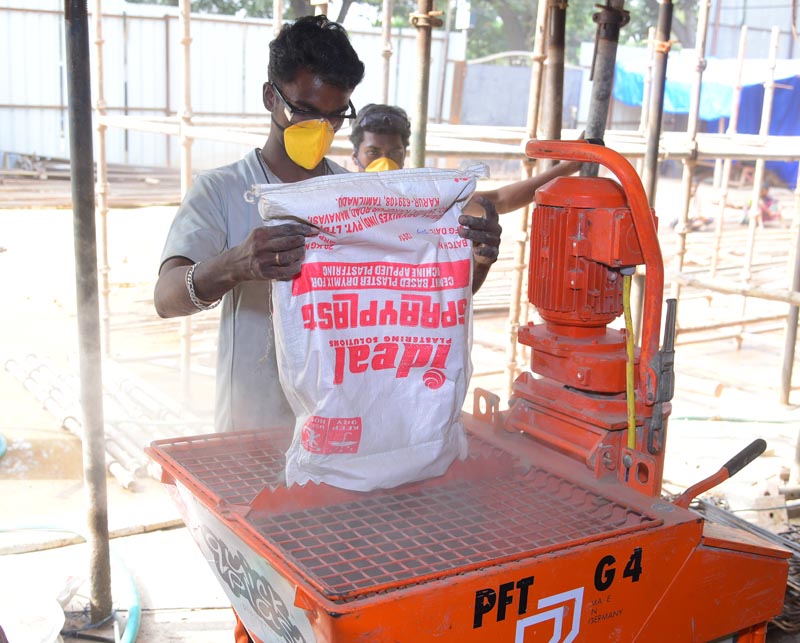
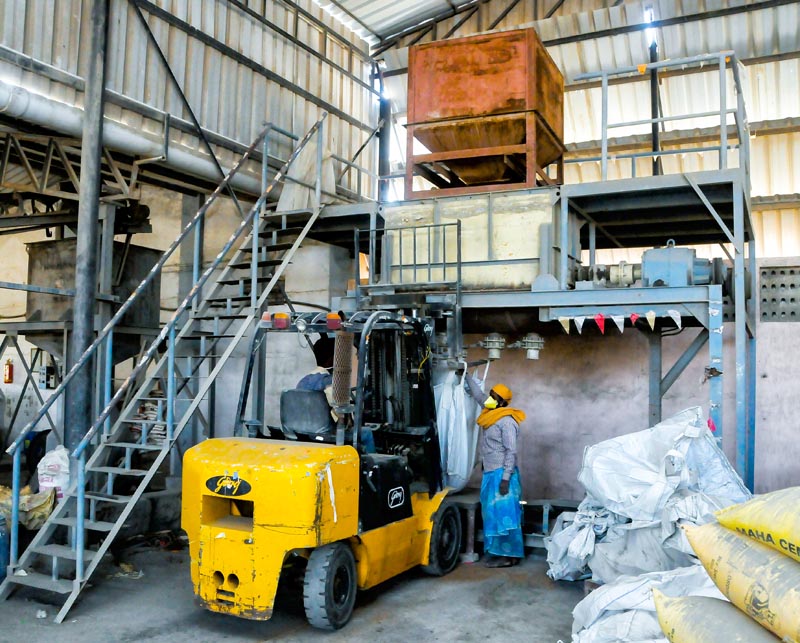
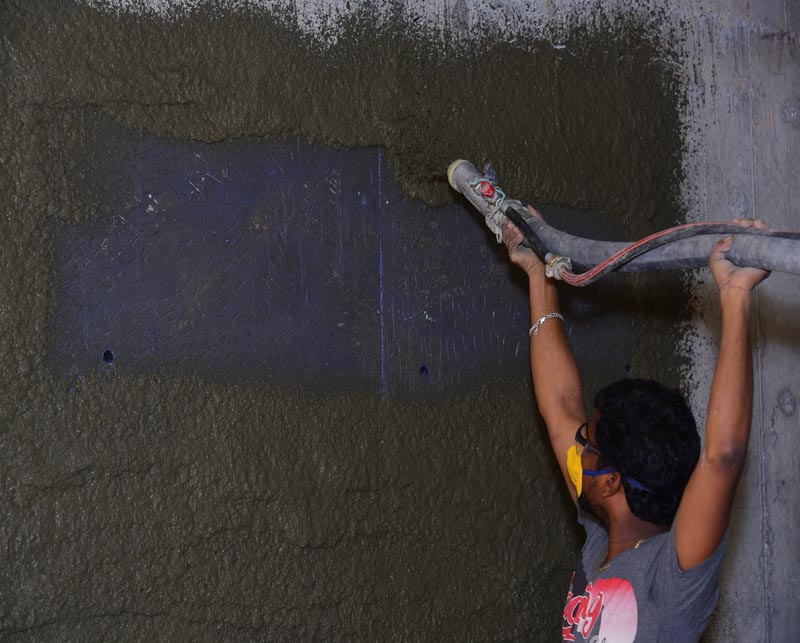
At Ideal Drymixes, this is the principle we build every product around. As a manufacturer of specialized construction dry mix solutions based in Karur, Tamil Nadu, we know that material reliability isn’t a footnote in a project report — it’s the difference between a structure that lasts decades and one that needs repair within a few years. Whether it’s waterproofing solutions like CeilingPlast or advanced application technologies like SprayPlast, every batch is manufactured to a consistent standard, so contractors and developers aren’t left improvising with substitutes when it matters most.
What Needs to Change
For India to hit its highway construction targets consistently, the conversation needs to shift from “how much money is available” to “how secure is the material supply chain.” A few things would help:
- Regional material banks near major project corridors, so contractors aren’t dependent on distant or seasonal quarry access.
- Standardized quality certification for bulk materials like aggregate and binders, so cost pressure doesn’t quietly become a quality compromise.
- Diversified sourcing for critical inputs like bitumen, reducing dependence on any single global supply chain.
- Early material planning, treated with the same seriousness as financial planning, at the tendering stage itself.
Budgets get the headlines because they’re easy to measure and easy to blame. Materials get overlooked because they’re unglamorous — sand, stone, and binder don’t make for dramatic news coverage. But if India wants its roads built on schedule and built to last, the fix has to start at the material supply chain, not just the finance ministry’s allocation sheet.
The next time a road project stalls near you, look past the funding headlines. Check what’s sitting — or not sitting — at the site. More often than not, that’s where the real story is.