
Why Construction Rework Is Killing Your Project Margins — And How the Right Mix of Products Fixes It the First Time
Every contractor knows the feeling: a crew finishes a wall, moves to the next unit, and three weeks later gets a call to come back and redo it. That callback rarely shows up as a single line item on the budget. It hides inside labour overruns, delayed handovers and quietly shrinking margins — and industry data shows just how large that hidden cost really is.
The Real Numbers Behind Rework
Research from the Construction Industry Institute puts direct field rework at an average of 5% of total project cost, ranging as high as 20% depending on the project type. Broader industry reviews covering decades of data put the figure at 5–10% of total construction costs on average, and some large civil projects see rework eat into 20% of the budget. Even the most conservative academic estimates — which isolate only confirmed field rework — still put post-completion correction costs at around 0.76% of contract value, enough to meaningfully dent margins on a large project.
In India specifically, RERA and CREDAI data cited by industry analysts shows that 70–90% of self-managed residential projects exceed their initial budget by 30% or more — and rework is consistently named as one of the biggest contributors to that overrun.
Where the Money Actually Leaks
Studies breaking down the root causes of rework point to a consistent pattern: miscommunication accounts for roughly a quarter of all rework, and bad or inaccurate site data accounts for another 14–22%. But underneath the process failures sits a simpler, more physical cause that gets far less attention — workmanship errors and material inconsistency at the site level, which independently account for up to 3% of total project cost on their own in industrial projects.
For contractors working with plaster, putty, tile adhesive and block-jointing compound, this is the category that’s most within their direct control. Unlike a design change or a client-requested variation, a wall that cracks because the site-mixed plaster wasn’t batched consistently is a preventable cost — and it’s one that repeats across every unit finished the same way.
Why Finishing-Stage Rework Is the Most Common — and Most Avoidable
Rework doesn’t distribute evenly across a project. Foundation and structural rework is expensive but rare, because it’s caught early and inspected heavily. Finishing-stage rework — plastering, putty, tiling — is where the volume actually sits, because it happens late, across the largest surface area of the building, and is most exposed to whatever inconsistency crept into site-mixed materials that day.
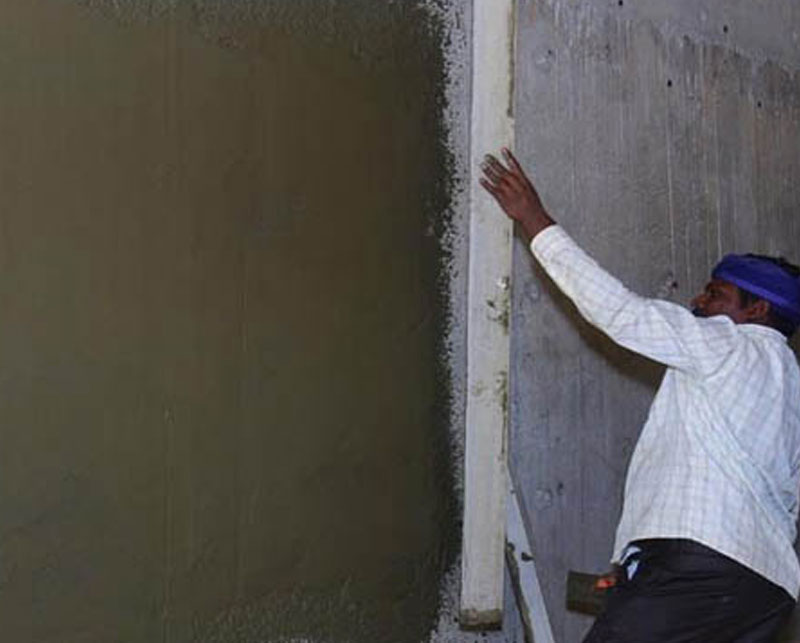
● Hand-mixed plaster with an off-ratio batch cures unevenly, cracks within a season, and forces a callback on every wall it touched — not just one.
● Inconsistent putty bonding causes peeling and flaking that often isn’t visible until the final coat of paint is on, by which point three trades have already moved past that unit.
● Tile adhesive that isn’t matched to the substrate or load leads to hollow-sounding tiles and lippage, both of which mean ripping out finished work.
Every one of these is a workmanship-and-material failure, not a design failure — which means it’s also the category a builder has the most direct power to eliminate.
Fixing It the First Time: Where Material Consistency Pays Off
The 56% of firms with consistent QA/QC processes that industry research shows keep rework under 5% of project budget aren’t succeeding through better paperwork alone — they’re succeeding because the materials going into the wall behave the same way on unit one as they do on unit fifty. That consistency starts before the trowel touches the wall, with the plaster and putty batch itself.
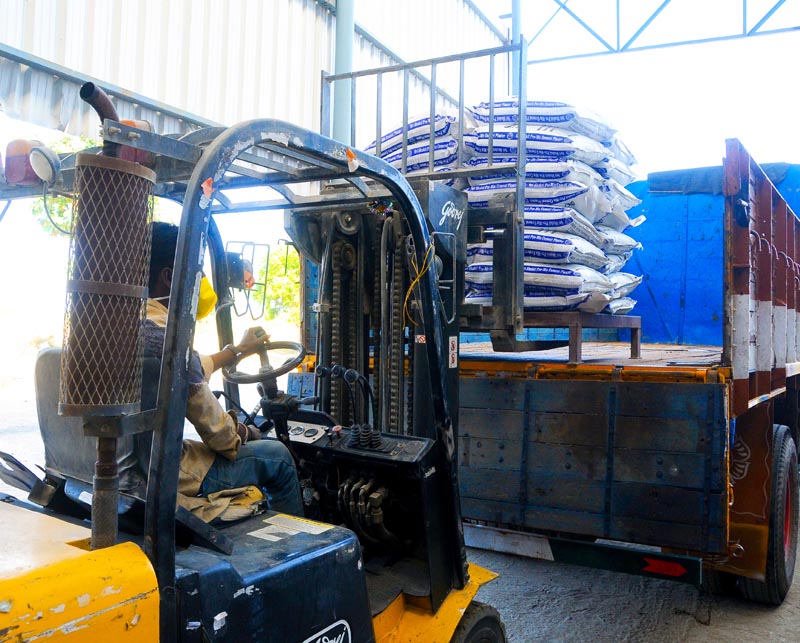
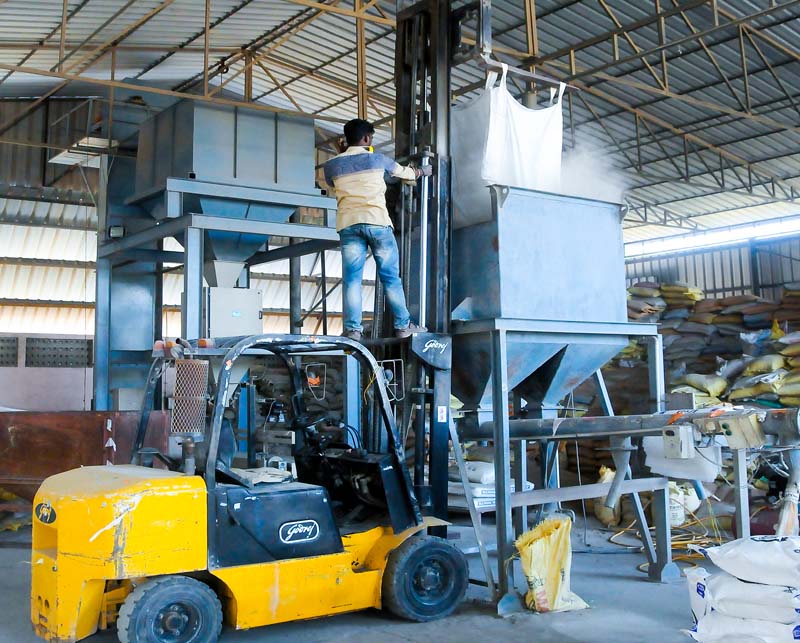
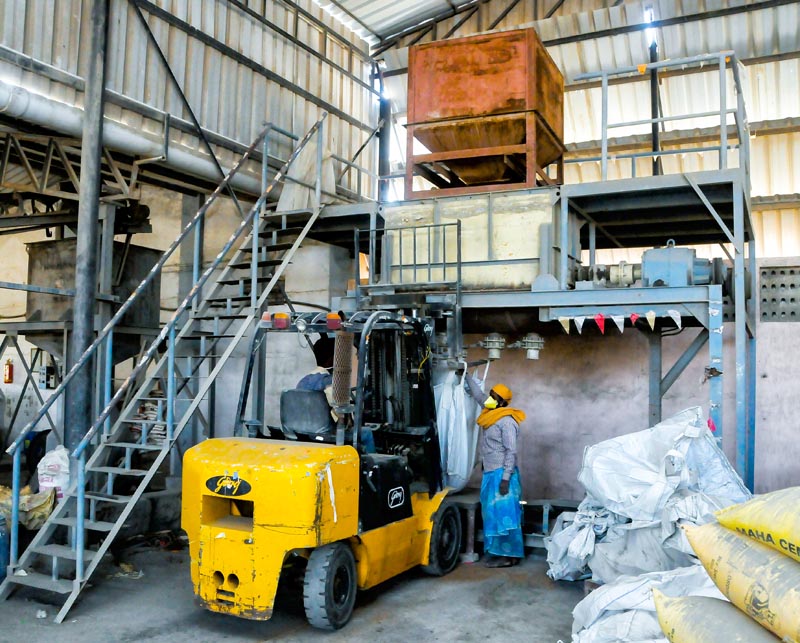
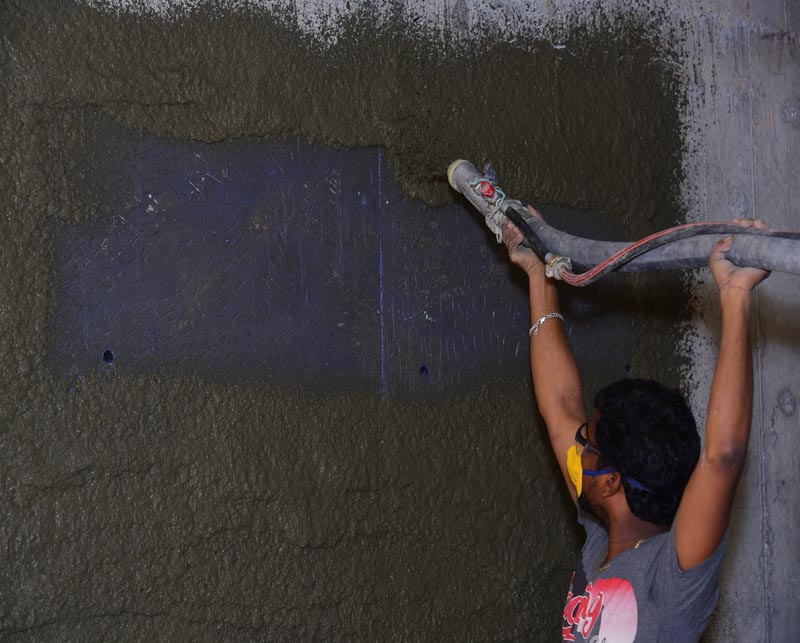
Ideal Drymixes has built its ready mix plaster, tile adhesive, wall putty and block laying compound range around exactly this problem, from our manufacturing facility in Karur, Tamil Nadu. Factory-controlled binder and additive ratios mean a site crew isn’t relying on getting a sand-cement-water mix right by eye, batch after batch — the single most common source of the finishing-stage callbacks that quietly erode margins on multi-unit projects.
The Margin Case for Getting It Right Once
On a mid-sized residential project, even the conservative 5% rework floor translates into a meaningful chunk of projected profit disappearing into redone plaster, repainted walls and re-laid tiles. None of that cost shows up as a dramatic single event — it accumulates unit by unit, callback by callback, until the finance team asks why margins came in lower than bid. Standardising on consistent, factory-batched materials at the plaster and putty stage is one of the few rework-prevention measures a contractor can implement without waiting on better site supervision or slower project timelines — it’s a specification decision, made once, that pays back on every unit that follows.