
Meta Description: Don’t let expensive flooring fail. Learn the difference between Grey, White, and Polymer adhesives and discover how Ideal Tilemate offers the perfect bond for vitrified tiles and marble without the “big brand” markup.
The “Hollow Sound” Nightmare
There is nothing worse than walking across a brand-new floor and hearing that dreaded “hollow” tap under your feet. You likely invested significantly in Italian marble or premium Double Charge Vitrified tiles, but just months later, they may start de-bonding or cracking.
The problem usually isn’t the tile. It’s what lies beneath it.
For decades, contractors relied on a simple sand-cement mortar. However, traditional cement struggles to bond with modern, low-porosity tiles. It simply lacks the grip. To fix this, the construction industry has shifted to specialized polymer-modified tile adhesives—often referred to by local masons as chemical for tiles or floor tile gum.
These chemical bonding agents offer the flexibility needed to handle thermal expansion (heat and cold) without popping the tile loose. But walking into a hardware store can be confusing. Should you buy Type 1 or Type 2? Do you really need the premium bag?
This guide cuts through the technical jargon to help you choose the right product from the Ideal Drymixes Tilemate range.
The 3 Types of Adhesive You Need to Know
Adhesives in the Indian market generally fall into three performance categories. Buying the wrong grade is the most common reason for flooring failure.
1. Grey Cement-Based Adhesives (Standard Grade)
Think of this as your baseline upgrade from loose cement.
- Best For: Ceramic tiles, small-format porous stones, and interior flooring.
- Why Use It: It provides a significantly stronger bond than site-mixed mortar and helps prevent shrinkage cracks. It is the standard high-strength choice for basic ceramic flooring jobs.
2. Polymer-Modified Adhesives (High Performance)
This is the modern standard for most homes. The mixture contains polymers (latex/acrylic) that turn the adhesive into a flexible, vitrified flooring paste.
- Best For: Vitrified tiles (2×2, 2×4), bathrooms, and wet areas.
- Why Use It: Modern tiles are dense and don’t absorb water. This adhesive creates a chemical bond that sticks to the tile surface like a magnet, making it an excellent waterproof tile glue.
3. White Cement Adhesives (Premium)
- Best For: Italian Marble, Granite, Glass Mosaics, and exterior cladding.
- Why Use It: Standard grey adhesive can seep into porous white marble, causing ugly dark stains on the surface. A specialized White tile adhesive ensures your expensive stone keeps its true color while offering maximum strength for vertical cladding.
Which Ideal Tilemate Product Do You Need?
At Ideal Drymixes, we don’t believe in complicating things. We have engineered three specific formulas to cover every use case, ensuring you get the right chemical bond for your specific project.
Option 1: Tilemate (The Economy King)
Your go-to solution for standard flooring and mosaic tile fixing.
- Application: Ceramic tiles and small-format porous stones.
- Best Location: Interior bedrooms, living rooms (Dry areas).
- Why it works: It offers superior bonding compared to traditional mortar at an entry-level price point.
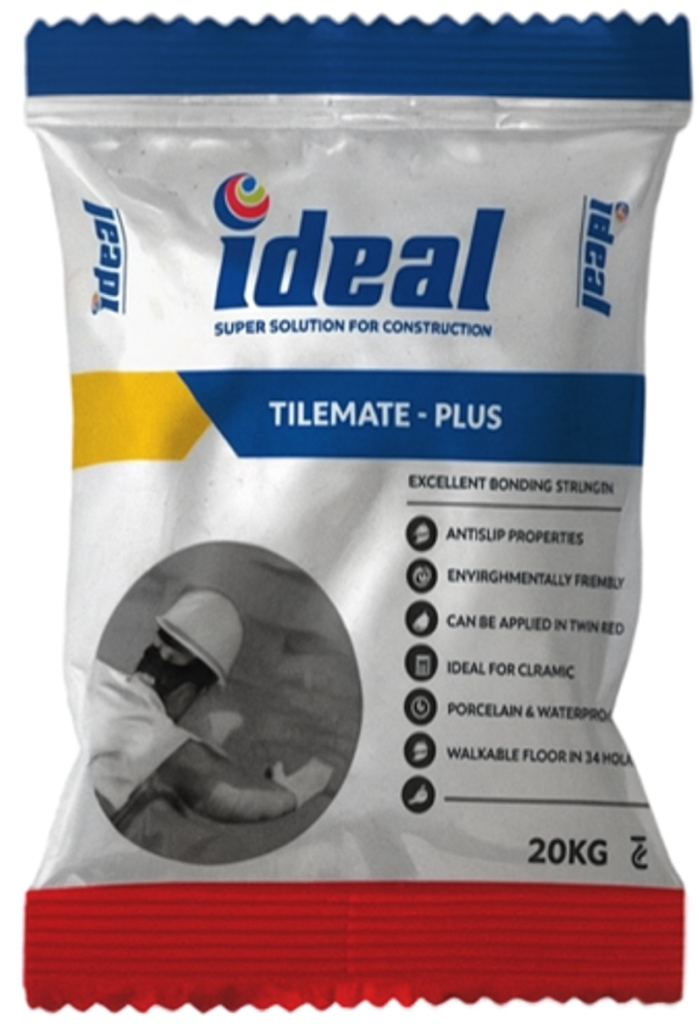
Option 2: Tilemate Plus (The Workhorse)
Designed specifically for heavy, non-porous vitrified tiles. It creates a robust barrier, making it suitable for wet zones.
- Application: Vitrified tiles (up to 600x600mm) and Ceramic-on-Concrete.
- Best Location: Bathrooms, Kitchens, Balconies, and Utility areas.
- Bonus Feature: It has Anti-Sag properties, meaning if you stick a tile on the wall, it won’t slide down while the glue dries.
Option 3: Tilemate Ultimate (The Professional)
This is the beast mode of adhesives. If you are doing a Tile-on-Tile application (sticking new flooring over old flooring) or installing heavy stone, this is non-negotiable.
- Application: Large format tiles, Natural Stone, Granite, and Swimming Pools.
- Best Location: Exteriors, Facades, High-Traffic Corridors.
- Key Feature: The White Cement Base prevents staining on expensive marble, maintaining the stone’s pristine look.
Market Reality: Are You Paying for Chemistry or Marketing?
Here is a secret the big brands won’t tell you: In the chemical industry, you often pay a premium for TV commercials, not for better polymers.
When you compare Ideal Tilemate against “Market Leaders” on the only metric that matters—technical specification (C1/C2 Grades)—the difference is clear.
By choosing Ideal Drymixes, you aren’t paying for the brand logo; you are paying for the chemical formulation.
- Standard Grade: Significant savings compared to retail giants.
- Polymer Grade: Up to 50% more cost-effective for the same bond strength.
- Premium White: Massive savings on large marble projects.
The Verdict: For a standard flooring project, choosing Ideal Tilemate Plus can save you a significant percentage on material costs compared to leading retail brands. That is money you can reinvest into better bathroom fittings or premium grouting.
5 Steps to a Perfect Bond (Don’t Skip These)
Even the best tile adhesive will fail if your mason cuts corners. Ensure your team follows this protocol:
- Surface Prep: The floor must be clean and dust-free.
- No Soaking: Old-school masons love soaking tiles in water, but for modern chemical adhesives, this is a mistake. Simply wipe the back with a damp cloth.
- Mechanical Mixing: Use a mechanical stirrer (drill mixer) to get a smooth paste. Hand mixing often leaves lumps that weaken the bond.
- Use the Right Tool: Demand that your mason uses a Notched Trowel. This tool creates “ribs” of adhesive that collapse under the tile, ensuring 100% contact coverage. “Blob-fixing” (putting just dots of glue) is the #1 cause of breakage.
- Patience: Wait at least 24 hours before walking on the floor or grouting the joints.
Frequently Asked Questions
Q: Can I use Tilemate Plus for Tile-on-Tile applications? A: You can, but for Tile-on-Tile (installing new flooring directly over old tiles), we strongly recommend upgrading to Tilemate Ultimate. The existing glaze on old tiles is very smooth; Ultimate provides the extra polymer grip needed to bond securely to that slick surface.
Q: Is there a specialized solution for Double-Charge tiles? A: Yes. For double-charge tiles larger than 2×2 feet, Tilemate Plus provides the necessary elasticity to handle the weight and thermal stress, preventing them from popping up later.